

40+
Years Of Experience
Sewer Backups Signal a Problem Below Ground
Sewer Line Repair & Replacement in Boyertown for recurring backups, slow drains throughout the home, and aging sewer pipes that have cracked, collapsed, or deteriorated
When multiple drains in a home back up at the same time—the basement floor drain surging while a toilet is flushed, or slow clearing throughout the entire house regardless of which fixture is used—the problem is not in the individual fixtures. It is in the sewer line that connects the home to the municipal system or septic connection. Gehringer Mechanical diagnoses and repairs sewer line problems for residential and commercial properties in Boyertown, tracing the cause of backups, identifying pipe damage, and completing repair or replacement work to restore proper wastewater flow.
Sewer line problems in this area frequently involve pipes that were installed decades ago in materials that have since degraded. Clay tile sewer lines, commonly used in Boyertown-area homes built before the 1970s, are prone to root intrusion at the joints and can crack or collapse as the surrounding ground shifts. Older cast iron lines develop internal scale buildup and section failures. Gehringer Mechanical's service includes inspection of the sewer line to identify the specific failure type—blockage from debris, root intrusion, pipe offset, or structural collapse—before determining whether repair or full replacement is the appropriate response.
Arrange a sewer line inspection to identify the location and nature of the failure before a partial backup becomes a complete obstruction or causes wastewater to surface in the basement or yard.
The Difference Between Clearing a Backup and Fixing the Line
Clearing a sewer backup removes the immediate obstruction, but it does not address the condition that allowed the blockage to form or the damage that may have developed in the pipe itself. Gehringer Mechanical distinguishes between a line that is blocked by accumulated grease or debris—where clearing produces a lasting result—and a line where root intrusion, pipe offset, or structural failure is the underlying cause. In the latter cases, the obstruction returns within a short period because the pipe's physical condition creates a recurring catch point for material flowing through the line.
After sewer line repair or replacement is completed, the observable changes are clear: all fixtures in the home drain without backup or surging, the slow clearing that persisted throughout the house resolves, and the unpleasant odor associated with wastewater held in a partially blocked or leaking line dissipates. Gehringer Mechanical confirms proper flow after the work is done before closing the excavation or completing the repair, ensuring the restored line handles the full drainage load of the property.
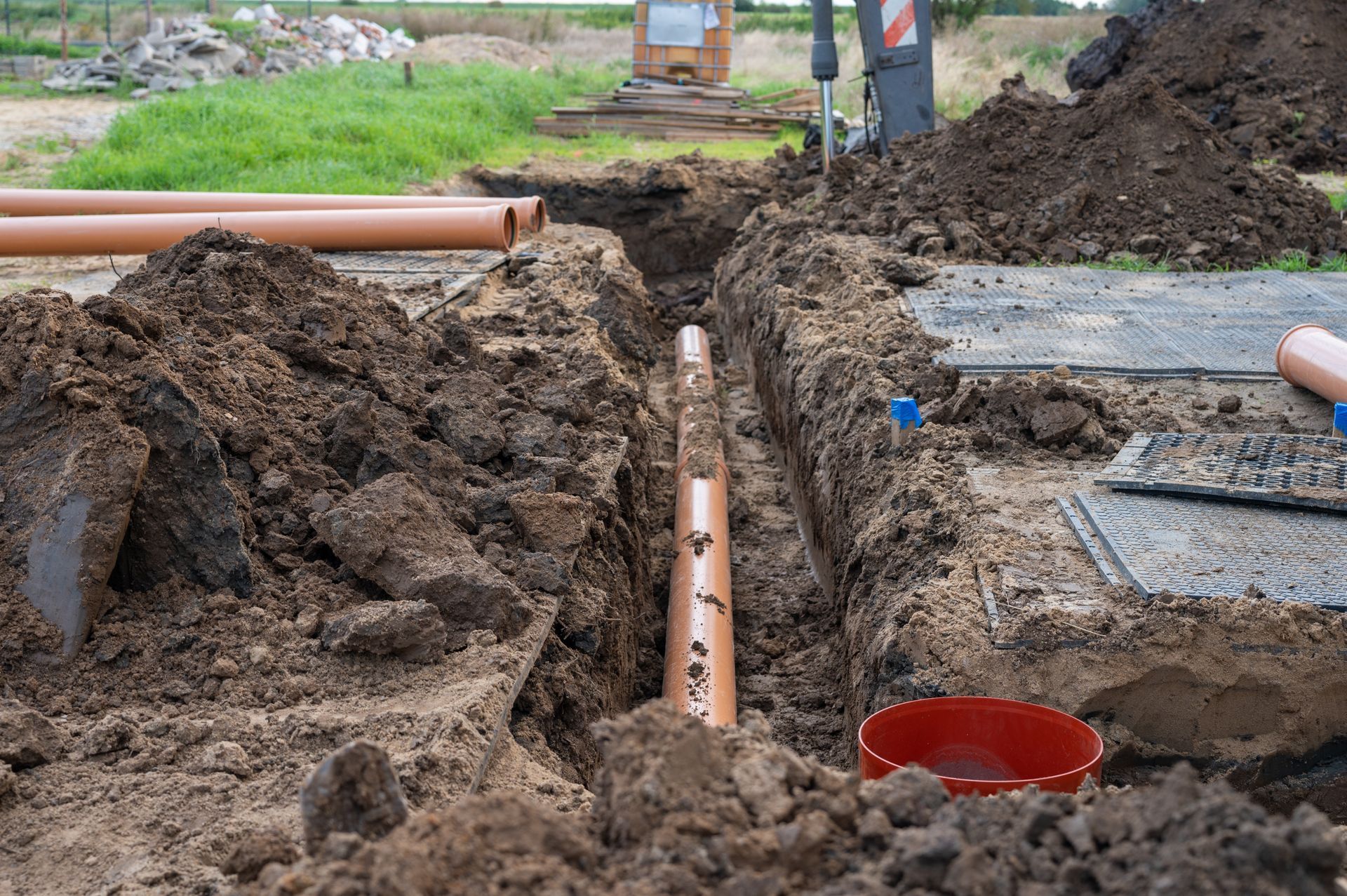
Underground sewer line replacement follows the pipe's existing path to the connection point, with new pipe installed at the correct slope to maintain gravity flow. Pipe material selection for replacement work is matched to the installation conditions and local code requirements. For properties where root intrusion is the primary issue, Gehringer Mechanical can advise on preventative measures that reduce the likelihood of re-intrusion after the new line is in place—particularly relevant for properties with large trees positioned along the sewer's route from house to street.
Answers About How Sewer Line Work Gets Done
These questions address the sewer line repair and replacement process, including what the inspection covers, how the cause of a backup is identified, and what property owners will observe after the work is complete.
How is a sewer line inspected to find the source of a problem? A camera is run through the line from a cleanout access point, transmitting live footage that shows the interior pipe condition, including any root intrusion, offset joints, collapsed sections, or accumulated scale that is restricting flow or creating a catch point for debris.
What causes tree roots to enter a sewer line in the first place? Roots are drawn toward the moisture and nutrients at sewer pipe joints; once a root tip finds an opening at a cracked or misaligned joint, it grows through and expands inside the pipe over time, eventually filling the line's interior cross-section and causing complete or near-complete blockage.
Why do homes in older Boyertown neighborhoods experience more frequent sewer line failures? Properties built before the 1970s were commonly connected with clay tile or cast iron sewer lines whose joints were sealed with materials that have since degraded, leaving openings for root intrusion and creating sections that shift or crack as the ground around them moves over decades of seasonal change.
What is the correct pipe slope for a replaced sewer line and why does it matter? Gravity-flow sewer lines require a consistent downward slope—typically a quarter inch of drop per linear foot—to carry solids along with the water; a line that is too flat allows solids to settle and accumulate while a line that is too steep allows water to outrun solids, both of which produce recurring blockages.
How can a property owner tell whether a sewer issue involves the private line or the municipal system? If multiple homes on a street are experiencing backups simultaneously, the problem is likely in the municipal main; when backups are isolated to one property and occur regardless of neighboring conditions, the failure is in the private sewer lateral between the home and the public connection point.
Gehringer Mechanical also performs sewer line repair and replacement in Pottstown and surrounding communities. To have a sewer backup or recurring drainage problem properly evaluated, contact Gehringer Mechanical to schedule a sewer line inspection for your property.

